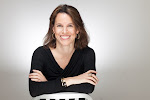
As president of my
synagogue, I have the honor of addressing the congregation each year on Kol Nidre. It gives me an opportunity to speak about community, synagogue life and the future of Judaism--all things about which I care passionately. Here is the speech I gave this year.
A
father in Florida calls his grown son in New Jersey. “David,” he says, “I am
going to ask your mother for a divorce.”
The
son is shocked, “After 55 years? We just saw you a few months ago and everything
seemed fine."
“It’s something I need
to do,” the father says. “First thing tomorrow, I am calling my lawyer.”
“Look,”
the son replies, “If you haven’t done anything yet, it’s not too late. It’s almost
Rosh HaShanah. I’ll come down there and we can talk. Just wait until I get
there.”
The
father agrees. David calls his sister Judy who lives in the neighboring town and
delivers the news. The siblings make last minute plans to take their families
to Florida and stage an intervention.
Judy calls her father that evening. “Daddy,”
she says, emotion in her voice. "David called me. What's going on? Please,
give this some time and think it through. David and I are coming for the
holiday. We’ll sit down, discuss the situation and work it out before it’s too
late.”
The
father hangs up the phone. He turns to his wife and says, “Okay,I got them here for Rosh HaShanah, but you are going to have to come up with something really good for Passover.
There is something inherently Jewish
about this joke. It's not just the holidays—I could have easily substituted
Easter and Christmas for Passover and Rosh Hashanah. But the underlying theme—the message to create
space in our lives for what is important—is the very foundation on which our
religion is built.
The first lesson in our Torah instructs
us to take one day a week away from work to focus on what is truly
important—our blessings, our families, ourselves, and God.
Despite this suggestion, for many of us,
it is often easier to make time for emergencies than it is for joys or
celebrations. It’s not that we don’t appreciate
life’s pleasures, but we get caught up in our obligations—which are real and do require attention. We fall into the habit of merely trying to
avoid the negative.
Not too long ago, a significant portion of
American Jewish identity was defined in reaction to the Holocaust. Being Jewish
was often more about denial and defiance than it was about spirituality and
community. After facing a very real, modern day threat of annihilation, Jews were
forced to confront blatant, and latent, anti-Semitism.
As a result, American Jews began
demanding equalities that had been denied. Fear translated into action and
engagement, and as Judaism became more openly accepted, unparalleled levels of opportunity
and Jewish engagement emerged.
While most agree that we are still in
that period, articles in Jewish journals are often gloomy about the future.
With fewer than 14 million Jews worldwide—and a growth rate half that of the
general population—many predict that the end of this Jewish Renaissance period is
near.
I do not agree that we are approaching
an end. And, I am not certain these doomsayers believe it either. Perhaps they
are trying to get us to act, to participate in a bigger conversation.
By playing on our worst fears, our
Jewish pundits want to inspire us to
prove them wrong. Tell people that
without their commitment to synagogues, to ritual, to communal life, the Jewish
religion will die and they will be
forced to take action.
After all, fear works. Stores advertise limited quantities because
consumers react to scarcity. It’s instinct to rush to a bedside of a gravely
ill relative, even if we visited less frequently when that person was healthy. A synagogue may find it relatively easy to
raise money to rebuild after a tragedy, but may struggle to fund an expansion
to serve a growing population.
Now, I am the last person to discourage any
kind of Jewish engagement. The result of widespread, long-lasting indifference would be catastrophic and is unacceptable.
I am
stating that we need a better approach. A fear based marketing tactic is nearly
impossible to sustain and can leave us emotionally wanting. More importantly,
it is the antithesis of our heritage. While Judaism gives us tools to deal with
crisis, our texts and customs do not
prescribe a crisis-based religion.
Judaism is about taking action, about partnering with community and God to create
a meaningful future. Despite comedic stereotypes of guilt and gloom, Judaism is
weighted far more toward optimism and opportunity than toward fear and
punishment. Our path was never meant to be defined by proving naysayers wrong,
but by envisioning, embracing and ensuring our potential.
We must lead with that promise, embrace
and celebrate Judaism’s rich history, meaningful rituals, and emphasis on
community and ethics that offer a compelling way of life for each to interpret,
shape and make our own. We are in the middle of a fantastic journey that began
thousands of years ago and is guiding us to a future filled with possibility
and hope.
This future is created every day here at
Rodeph Sholom. Our programs, activities and accomplishments should fill all of
us with optimism and excitement.
In the past year, more than 1740
families were members of our congregation. Nearly 400 people studied in adult education
classes. 103 children became b’nai mitzvah. Almost 800 individuals served our community on
Mitzvah Day. Our monthly Shabbat b’Shir services were overflowing and on many
Saturday mornings we offered 5 different Shabbat experiences. We sent nearly 50
students to Israel on various programs, in addition to two family trips that
were filled to capacity and a Jewish heritage tour of Spain.
This year, our community is showing
every sign that it will continue to grow with an increased number of new
members,all of whom, thanks to your generosity, we are able to welcome, no matter what their financial situation.
We are re-invigorating our already thriving
community service programs. We will, once again I’m sure, tomorrow collect
record amounts of much needed food to donate to local food banks. Our ritual
experiences for New York’s special needs population, including last week’s Rosh
Hashanah service, are rapidly expanding.
Tomorrow afternoon, those praying in the Schafler will test a new High
Holy Day prayer book, serving as pilot site for the national Reform Jewish community.
And again this year, more than 100 children from Rodeph Sholom will become
b'nai mitzvah.
We at Rodeph Sholom are not reacting to
fear. We are running to the future with arms open wide. Our vision is clear,
our goals are simple:
Create ritual, impart knowledge, build
community and inspire righteous deeds.
This is our offer, OUR marketing message, and this is the foundation that will
attract, sustain and nourish generations to come.
To those who predict the end of
synagogue life, who bemoan the diminished commitment of children to study
ancient texts, who mourn the loss of community engagement, I invite you to come
here. To pray, study and serve with Rodeph Sholom is to experience the true potential
of Jewish communal life. No one should
settle for anything less.
Of course, there is more to do. We can
always improve -- and I will ask for your assistance in doing so. We would like
to reach more people through service opportunities. Our programs to connect
with the unaffiliated will continue. Our efforts to create meaningful prayer
experiences for different segments of our community will increase. And our
plans to better engage our youth, literally our future, will grow with enhanced
offerings and, soon, we hope, with improved physical space for programming.
When I consider the possibilities, I am
filled with eagerness, and hope that you are too. With your ongoing commitment,
we will engage people through excitement and anticipation, not fear and
obligation. We will offer compelling ritual, study and service opportunities. And
we will continue to educate, nurture and inspire the children who will sustain and
expand our heritage. It will be a wonderful, sacred journey and I look forward
to taking it with you.
Thank you for your support,
participation and generosity. I am honored to have this role in our community.
My family joins me in wishing you a g'mar tov and a 5773 blessed with hope, happiness, health and peace. Shanah tovah.