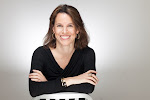
I have recently had the honor of becoming president of my synagogue. As such, I have the honor of addressing the congregation on Kol Nidre. Below is the much of the text of my speech that explains my feelings about the importance of synagogue life. Apologies for the length; thank you for indulging me.
Early celebrations of Yom Kippur were much different than today’s. When the Temple stood in Jerusalem, observance was far less participatory. On Yom Kippur, Jews would travel to the Temple where the High Priest would seek repentance from God on behalf of the entire community. The Priest would symbolically confer the sins of the Israelites onto a goat that would be released in the wilderness and then sacrifice another goat as a purification offering.
The High Priests and Temple were the focal points of Jewish observance throughout the First and Second Temple Periods. It was the destruction of the Second Temple that marked the end of this era of Jewish life and the creation of the Diaspora that opened the door for a new kind of Judaism.
Religious practice became more participatory with greater involvement from the individual. The synagogue emerged as an important institution and evolved to become the center of social and religious life. Historians attribute the popularity and portability of the synagogue to the continuity of the Jewish people. Without the synagogue, we would not be here today.
My own relationship with synagogues started at birth. My parents were avid temple goers and the synagogue was the center of not just their religious life, but their social life as well. By age 6 or so, we were living in South Windsor, CT, a small suburb east of Hartford. The town was close to my father’s work, had a decent public school system and a small, but active, Reform synagogue.
In my family, regular attendance at Shabbat services was mandatory. Being that this is Yom Kippur, a confession: I did not always appreciate the joys of going to synagogue. Often, on Friday afternoons, I would complain of mysterious ailments in an effort to be left home. “Friday Night Fever” was my parents’ diagnosis, as they pushed me into the car. However, it did not take long for me to memorize the words, both English and Hebrew, of nearly every Shabbat evening service in the Gates of Prayer. My parents’ faces would be marked by a combination of horror and pride as I would randomly quote prayers, responsive readings or meditations at inappropriate times.
As I started to look ahead to my Bat Mitzvah, I decided that if I was going to spend so much time in synagogue, I might as well make the most of it. I may have known the words in the prayer book, but it was time to learn the meanings. Not just of the prayers, but also of the ritual and practices that were associated with Judaism. It was time to stop reciting and start participating.
Through religious school studies, combined with experiences at Camp Eisner, a Reform Jewish summer camp, I began to develop my own relationship with God and an appreciation for ritual and observance.
I was also absorbing the bigger picture. Judaism was more than ritual and learning. It was about community and, in my town with a small Jewish population, the center of this community was our synagogue. Our group of 100 families celebrated every simcha together. We weighed in on political issues like prayer in our public schools. We adopted a family of Russian Jews and supported them until they could sustain themselves. We walked for Israel and raised funds to support Jewish causes.
And, we came together in times of sadness as well. My own relationship and reliance on the synagogue community was sealed when I was nearly 17 and my father was diagnosed with cancer. While he was ill, the parade of visitors, study partners and friends assured us that we were not alone in this struggle. The day he was diagnosed was the last day anyone in my home prepared a meal for almost 18 months. In the 6 months he was treated to nearly a year after his death, there was always dinner waiting for us on our door step, organized, cooked and delivered by someone from our synagogue.
While that entire period was incredibly formative, it was all those leading up to it that enabled me to survive that experience. At a time when I could have easily turned from God, I was fortunate to have a history and heritage to support me. Embracing what were by then familiar Jewish traditions sustained us all. My father especially, who for the first time in decades was released from work obligations, had the time to study and explore religion and God as never before. The strength and comfort he drew from his faith and community enabled him to come to terms with his disease and set a powerful example.
Modern medical advancements were not enough to save my father from cancer, but primitive thousand year-old Jewish practices and traditions saved the rest of our family. Our synagogue community guided us through months of confusion, loss and pain. And it is that foundation and those feelings have guided and sustained me since.
My story of my relationship to synagogue is likely not that all that different from the ones each of you holds in your own hearts. It often starts with a particular need or an event—God willing, a happy one—but an event that is meaningful and draws you to a synagogue. Maybe even this synagogue.
Perhaps you were seeking a Shabbat service, a rabbi to perform a wedding or a religious school for your child. Maybe you were in the process of choosing Judaism or you read about an adult education class of interest. Or perhaps it was for help in your time of need – a shiva minyan, a counseling session, a funeral.
And we, Rodeph Sholom, were able to fulfill that need. And the way we did it –that sermon, that prayer, that class or even committee meeting, touched you and encouraged you to stay and try something else. And for that, I am grateful.
Because the reality is, our community is only as strong as the people who comprise it. And our ability to help each other, to provide that ritual, education, philanthropic or programmatic experience is 100% dependent on all of us showing a willingness to not only find what we are seeking but also to help others meet their own needs.
There are many who will point to changing demographics, declining percentages of affiliated Jews and growing numbers of individual and even virtual ritual opportunities as proof of the declining relevance of the synagogue.
I could not disagree more. In a time where the world around us is changing rapidly, when technology evolves faster than we can read the accompanying directions, when uncertainty is the only thing that is certain, the presence of a synagogue community—of this synagogue community—can be a lighthouse in an otherwise stormy sea.
This congregation provides an unbroken link between our past and our future. For nearly 170 years, Rodeph Sholom has flourished through its commitment to the deeds on which the entire world stands—study, prayer and acts of loving kindness. Like a three-legged stool, you need all for balance. If you remove the communal aspect of our lives, you are taking away a central obligation of Judaism. We are not just individuals, we are part of a larger people who are ultimately responsible for each other.
Each day, Rodeph Sholom lives that promise. Our buildings may be large, our list of members may seem long, but we are no different from that synagogue of my childhood—we are a network of small, interconnected groups that need and support each other. The examples are numerous: our Congregation Based Community Organizing initiative through which we discovered an overwhelming demand for ritual experiences for families with special needs, the first of which was held last week on Rosh HaShannah, our Young Families Group, Our Young Professionals Group, our Empty Nesters. Those who study torah, participate in Mitzvah Day. Or the group who took care of Davida Bernstein. An elderly congregant with no family in New York City, in her declining years, Davida was never alone. There was someone from Rodeph Sholom to take her to doctors’ appointments, provide meals, or visit. And it was our own Rabbi Levine who took that early morning call from the doctor and later led the congregation in saying Kaddish.
This is Rodeph Sholom—and I am honored and proud to be a part of it. Here, you can meet your own needs, be they are spiritual, educational, philanthropic or communal. But you can, and must, help others meet theirs as well. Be a part of our community, not just because it will enhance and enrich your own life—and I firmly believe it will—but also because it enable the same for others. By attending services, classes or events you are creating opportunities for others to do the same; a sacred and selfless act. And frankly, our world can always use a few more of those.
And yes, your financial support is also important, as well. The ritual services we offer, the religious school, the b’nei mitzvah program, the Shabbat dinners, the adult education, the youth programming, the hundreds of activities that take place here have always been open to everyone regardless of ability to pay. It is part of the very fabric of who we are as Jews and as Congregation Rodeph Sholom. We are committed to keeping that promise and only with your continued generosity can we make sure that we never have to break that sacred vow.
Each of us sitting here tonight has found something in this holy place that touches us; please join me in making sure that we can create that same opportunity for future generations. I look forward to working with you in the coming years to ensure that Rodeph Sholom continues to grow and thrive. On behalf of the entire congregation, thank you for your dedication and commitment.
Sunday, September 19, 2010


Thursday, August 5, 2010
I (Heart) New York
Yesterday was a big day for New Yorkers as two of our own were recognized for outstanding accomplishments. I am not talking about Alex Rodriguez who finally hit his 600th home run--though now Yankee fans around the world can breath a sigh of relief and concentrate on the pennant race--but about two others who have both set tremendous examples.
The first is our very own Mayor--Michael Bloomberg. About six weeks ago, Bill and Melinda Gates, together with Warren Buffet, kicked off what could be the most world changing philanthropic act ever. News of a clandestine dinner hosted by this trio leaked out. Details revealed that in between courses, the guests, selected for their multi-billionaire status, were encouraged to take the “Giving Pledge” --a vow to donate at least half their wealth to charity.
These three philanthropists are rumored to have personally called at least 80 of the Forbes 400 richest Americans. To date, at least 40 have committed and Mayor Bloomberg was one of the first to add his name to the list and publicly declare his intentions. Thank you, sir. You honor our city with your leadership in this field. As an American, I am doubly proud to see the commitment my fellow citizens continue to hold for improving the world.
The Giving Pledge web site contains the names and stories of all who have gone public with their commitments. I encourage you to read them. Their stories are moving and inspirational.
The second New Yorker is someone you probably do not know unless you read today’s Daily News or New York Post--Jorge Muñoz, of Queens. Yesterday, President Obama gave out the 2010 Presidential Citizen Medals to 13 Americans. This award is given to those Americans "who have performed exemplary deeds of service for their country or fellow citizens"--whose commitments to improving their communities are truly outstanding. This is another list you should read.
Jorge Muñoz, a school bus driver from Queens, created a mobile soup kitchen. Every night, he would drive around and deliver hot meals to homeless people that would otherwise have gone hungry. Here is what President Obama said about him:
"When Jorge Muñoz saw homeless men gathered on a street corner with nothing to eat, he could have rolled up his window and driven away. Instead, he came home from his job as a school bus driver and started cooking hot meals for anyone who was hungry. These days, the 'Angel of Queens' feeds over 100 people every night, rain or shine. And Jorge says, 'You have to see their smile. That’s what I get paid.'"
You don’t need to be a billionaire to change the world.
The first is our very own Mayor--Michael Bloomberg. About six weeks ago, Bill and Melinda Gates, together with Warren Buffet, kicked off what could be the most world changing philanthropic act ever. News of a clandestine dinner hosted by this trio leaked out. Details revealed that in between courses, the guests, selected for their multi-billionaire status, were encouraged to take the “Giving Pledge” --a vow to donate at least half their wealth to charity.
These three philanthropists are rumored to have personally called at least 80 of the Forbes 400 richest Americans. To date, at least 40 have committed and Mayor Bloomberg was one of the first to add his name to the list and publicly declare his intentions. Thank you, sir. You honor our city with your leadership in this field. As an American, I am doubly proud to see the commitment my fellow citizens continue to hold for improving the world.
The Giving Pledge web site contains the names and stories of all who have gone public with their commitments. I encourage you to read them. Their stories are moving and inspirational.
The second New Yorker is someone you probably do not know unless you read today’s Daily News or New York Post--Jorge Muñoz, of Queens. Yesterday, President Obama gave out the 2010 Presidential Citizen Medals to 13 Americans. This award is given to those Americans "who have performed exemplary deeds of service for their country or fellow citizens"--whose commitments to improving their communities are truly outstanding. This is another list you should read.
Jorge Muñoz, a school bus driver from Queens, created a mobile soup kitchen. Every night, he would drive around and deliver hot meals to homeless people that would otherwise have gone hungry. Here is what President Obama said about him:
"When Jorge Muñoz saw homeless men gathered on a street corner with nothing to eat, he could have rolled up his window and driven away. Instead, he came home from his job as a school bus driver and started cooking hot meals for anyone who was hungry. These days, the 'Angel of Queens' feeds over 100 people every night, rain or shine. And Jorge says, 'You have to see their smile. That’s what I get paid.'"
You don’t need to be a billionaire to change the world.
Monday, July 12, 2010
It’s Not What You Spend, But How You Spend It.
Israel’s Finance Ministry announced that increases in the country’s Education budget would not keep pace with increases in the national budget.
A budget reflects the priorities of the organization allocating funds; by not increasing the education budget, the Israeli government is making a clear statement about its view on the importance of educating its children vs. other programs and initiatives.
That said, I can’t say that I disagree with the Finance Minister on this particular point. The education budget has increased steadily over the past two decades while student performance has continued to decline and the schools themselves continue to decay. It not always about what you spend, but how you spend it.
It is time for the Israeli government to get serious about education reform. It is a crisis that must be addressed immediately. Improve the curriculum, provide training and development for teachers, upgrade the facilities. Until then, thousands of children will continue to be left behind, ignored by their government that will be forced to support an under-educated population.
A budget reflects the priorities of the organization allocating funds; by not increasing the education budget, the Israeli government is making a clear statement about its view on the importance of educating its children vs. other programs and initiatives.
That said, I can’t say that I disagree with the Finance Minister on this particular point. The education budget has increased steadily over the past two decades while student performance has continued to decline and the schools themselves continue to decay. It not always about what you spend, but how you spend it.
It is time for the Israeli government to get serious about education reform. It is a crisis that must be addressed immediately. Improve the curriculum, provide training and development for teachers, upgrade the facilities. Until then, thousands of children will continue to be left behind, ignored by their government that will be forced to support an under-educated population.
Monday, March 23, 2009
Where Have All the Dollars Gone?
In the past few weeks, public opinion against Wall Street and anyone who has ever worked in the financial services industry has clearly reached an all-time low. Congress is seeking to enact retroactive taxes that could impact thousands of people, and AIG employees are receiving regular death threats.
This wave of anger and desire for punishment is overlooking the critical philanthropic role that many financial services professionals play in our society. Yes, many Wall Street bankers, traders, and their colleagues at hedge funds and private equity firms may earn salaries well above the national average. But they also contribute a huge percentage of that wealth to charity. Some firms actually mandate percentages of income that senior executives are required to donate.
New York City is home to thousands of organizations that provide food, shelter, clothing, education, job training, access to the arts, counseling, medical services--the list goes on and on. These programs help not just New Yorkers, but people in need around the country and around the globe. Moreover, these organizations also employ approximately 14% of NYC’s workforce (source: New York City Economic Development Corporation).
The impact the loss of these donor dollars will have on the not-for-profit community is already being felt and will only worsen over time. Daily, I learn of organizations--many of which have been around for decades--that are cutting programs and laying off staff. In the next few years, literally hundreds of millions of philanthropic dollars will disappear, perhaps never to be seen again.
This tragedy must be recognized and addressed. The recession will only increase the demand for the types of services these organizations provide. Philanthropically-minded individuals who now face salary caps, higher taxes and restrictions on charitable deductions are going to be less incentivized--and less able--to help the organizations that have relied on them in the past.
Of course, I am not an unbiased source. I live in New York and--as even our Mayor has admitted--this city’s economy is dependent on the financial services industry. I also run a not-for-profit organization that was founded by a handful of young Wall Street professionals who used their first bonuses to help others. Yet I see every day the importance of Wall Street, not only to our city, but also to our country and our world—and this is a message that seems to be getting lost in the press. We can’t blame this mess on an entire profession. We need to move forward. America has always been a very charitable society--let’s not change that.
This wave of anger and desire for punishment is overlooking the critical philanthropic role that many financial services professionals play in our society. Yes, many Wall Street bankers, traders, and their colleagues at hedge funds and private equity firms may earn salaries well above the national average. But they also contribute a huge percentage of that wealth to charity. Some firms actually mandate percentages of income that senior executives are required to donate.
New York City is home to thousands of organizations that provide food, shelter, clothing, education, job training, access to the arts, counseling, medical services--the list goes on and on. These programs help not just New Yorkers, but people in need around the country and around the globe. Moreover, these organizations also employ approximately 14% of NYC’s workforce (source: New York City Economic Development Corporation).
The impact the loss of these donor dollars will have on the not-for-profit community is already being felt and will only worsen over time. Daily, I learn of organizations--many of which have been around for decades--that are cutting programs and laying off staff. In the next few years, literally hundreds of millions of philanthropic dollars will disappear, perhaps never to be seen again.
This tragedy must be recognized and addressed. The recession will only increase the demand for the types of services these organizations provide. Philanthropically-minded individuals who now face salary caps, higher taxes and restrictions on charitable deductions are going to be less incentivized--and less able--to help the organizations that have relied on them in the past.
Of course, I am not an unbiased source. I live in New York and--as even our Mayor has admitted--this city’s economy is dependent on the financial services industry. I also run a not-for-profit organization that was founded by a handful of young Wall Street professionals who used their first bonuses to help others. Yet I see every day the importance of Wall Street, not only to our city, but also to our country and our world—and this is a message that seems to be getting lost in the press. We can’t blame this mess on an entire profession. We need to move forward. America has always been a very charitable society--let’s not change that.
Tuesday, November 25, 2008
Don't Be Such a Stranger
A recent study examining giving patterns of wealthy donors noted that 60% of households that stopped giving to a specific charity did so because they no longer felt connected to the organization.
This lesson is important for all nonprofit organizations, particularly in these difficult times. Economic circumstances may result in declined giving, even from long time supporters, but it is more important than ever to maintain relationships with donors.
Charity executives need to be turning up the communications--emails, letters, reports--to ensure that donors continue to feel connected to the organization and understand that their support is making a difference. Donor cultivation is always important, but in this economy it becomes even more critical to let your supporters know how much you appreciate them.
Wednesday, October 8, 2008
"The Times They are a-Changin'" (Bob Dylan)
Just when you think the economic news can’t get any worse, it does. Daily stock market declines, a credit crisis, and talk of a long lasting, international recession crowd the headlines and broadcasts. Nearly everyone is worried about their own jobs and the financial health of their companies.
For those of us in the not-for-profit world, the stress is even greater. Our success is directly dependent on the income of others; donations come from disposable incomes. Despite the best intentions and the philanthropic nature of Americans, I am uncomfortably certain that there will be a decline in charitable giving this year.
So how should nonprofit organizations respond? If you don’t have the money to fund your programs, the answer is painful yet simple--you must cut. But if you do have enough capital to fund your current activities, what should you do? Cut now to save for next year? Continue to spend normally while expecting to substantially reduce budgets in the future? Nothing is black and white, and there is no one right answer. Here are a few suggestions to help not-for-profit executives weather the current economic climate:
- Continue to review budgets and trim anything that is unnecessary. Donors will want to see that you are responding to the economy. They’re cutting back, their businesses are cutting back, and you should too.
- Continue to fundraise--if you don’t ask for money, you won’t get it. Don’t be surprised if even long time donors turn you down or decrease their giving, but don’t give up. You must keep asking.
- Involve your board in the discussion. Reach out to key supporters for their opinions. Have them help you identify different options.
- Ask board members for their own personal financial commitments. Now is the time for a board to show leadership. If they can’t commit during these times, you can’t expect others to do so.
- Develop an action plan that includes future decision-making milestones.
- Communicate with your supporters. Let your community know how the economic uncertainty will (or will not) impact your organization and the demand for your services. Focus on donor stewardship so that when the market does come back, your support base will too.
There may be some not-for-profit organizations--like their for-profit cousins--that do not survive the current downswing. This is an unfortunate reality. However, if your services are in demand, your programs effective and your operations sound, you will get through this period. It may involve hard decisions and unpleasant actions, but the times have to change back at some point--don’t they?
Thursday, September 18, 2008
"These are the times that try men’s souls." (Thomas Paine, 1776)
The front page of today’s Wall Street Journal included a headline that read “Worst Crisis Since ‘30s, With No End in Sight.” It is the latter half of this sentence that is particularly frightening.
Organizations must keep up their development efforts in order to meet this demand. No one said the work was easy, but we all agree that it must get done.
Subscribe to:
Posts (Atom)